| Box Style | As Mention Above |
|---|---|
| Dimension (L + W + H) | All Custom Sizes & Shapes |
| Minimum Run ( For Boxes and Mylar Bags) | 100 Boxes - 1000 Mylar Bags ( 500 each design) |
| Paper Stock | 10pt to 28pt (60lb to 400lb) Eco-Friendly Kraft, E-flute Corrugated, Bux Board, Cardstock |
| Printing | No Printing, CMYK, CMYK + 1 PMS color, CMYK + 2 PMS colors |
| Finishing | Gloss Lamination, Matte Lamination, Gloss AQ, Gloss UV, Matte UV, Spot UV, Embossing, Foiling |
| Included Options | Die Cutting, Gluing, Scored,Perforation |
| Additional Options | Eco-Friendly, Recycled Boxes, Biodegradable |
| Proof | Flat View, 3D Mock-up, Physical Sampling (On request) |
| Turnaround | 7 - 8 Business Days |
| Shipping | FLAT Position |
Why Choose Custom Hat Boxes?
Hats are awkward to pack. A stock carton that fits one cap is too tight for a structured snapback and far too loose for a wide-brim hat. Custom sizing solves that, and it also gives you control over how the box looks when a customer picks it up.
Product Protection and Secure Packaging
The main risk to a hat is crushing, not impact. A bent brim or a dented crown can make a product unsellable, and it often happens in a stockroom or a shipping carton rather than on the shelf. A box sized to the hat keeps the shape from shifting and holds the brim flat.
Protection depends on the material and the fit. A snug box with a paperboard or corrugated wall resists pressure from stacking. Paper or board inserts can hold the crown in place, so the hat doesn’t rattle during transit.
Professional Product Presentation
A hat that arrives loose in a poly bag reads as a commodity. The same hat in a clean, printed box reads as a considered product. That matters most for premium headwear, limited drops, and gift purchases.
Presentation also helps in practical ways. A printed box shows the brand name, collection, and size on the shelf, and it gives customers something to keep or reuse.
Packaging for Different Business Needs
A streetwear label releasing a limited cap needs a different box than a milliner selling formal hats. The first may want a bold, flat print and a stackable shape. The second may want a taller round or large rectangular box with a soft finish and a protective insert.
Retail stores, online sellers, and promotional merchandise programs all use hat packaging differently. The right design starts with where the box will spend most of its time: on a shelf, in a shipping carton, or in a customer’s closet.
Materials Used for Custom Hat Boxes
Material choice affects strength, print quality, weight, and cost. Hats are light, so you rarely need maximum rigidity. What you do need is a box that keeps its shape under stacking and handling. Confirm which materials are available for your chosen style when you request a quote.
Cardboard and Paperboard Options
Paperboard is a common choice for folding cartons and works well for lighter caps sold in retail. It takes printing cleanly, which suits detailed artwork and full-color logos. It is also lighter to ship in volume.
Heavier board or corrugated construction makes sense for larger hats, taller crowns, or boxes that will be shipped without an outer carton. Thicker walls hold their shape better when boxes are stacked in a warehouse.
Kraft Packaging Options
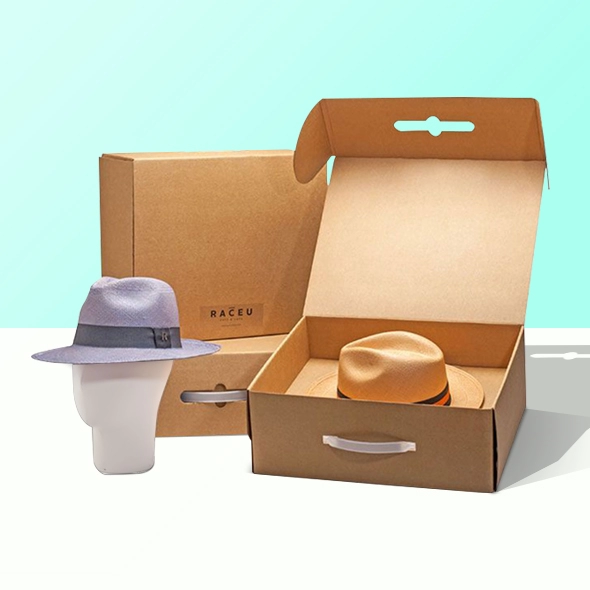
Kraft suits brands with an earthy, workwear, outdoor, or handmade identity. A kraft box with a one-color logo can look deliberate and inexpensive to produce. It pairs well with simple stamped or screen-style artwork.
Kraft has limits. Bright, saturated colors can look muted on its natural brown surface, so it isn’t the best match for a neon or high-contrast design. Test your artwork on kraft before committing to a large run.
Choosing the Right Material
Start with the hat. A soft, packable cap needs less structure than a stiff straw hat or a felt fedora. Then consider where the box will travel. Retail-only boxes can be lighter, while boxes that ship directly to customers should be stronger.
Appearance is the last factor. Match the material to your brand: coated board for a clean, polished look, kraft for a natural one. Weigh these against your budget and expected order volume.
Custom Sizes and Box Styles
Hats vary more in shape than most apparel, so sizing is the most important decision on this page. A wrong measurement leads to a box that crushes the hat or lets it slide around.
Custom Size Packaging
Measure the hat, not the box you hope to use. For a baseball cap, record the brim length, crown width, and crown height. For a wide-brim hat, record the full brim diameter and the crown height.
Allow a little extra room so the hat slides in without catching, but not so much that it shifts. If you sell several sizes or styles, give each its own measurements rather than using one average box.
Popular Box Styles for Hat Packaging
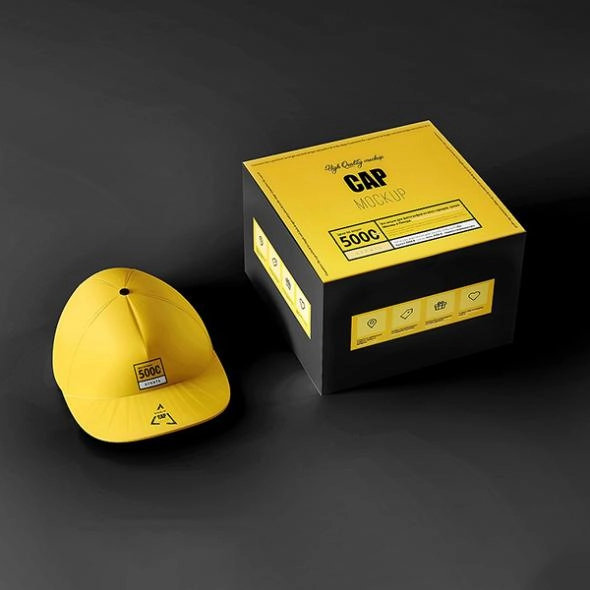
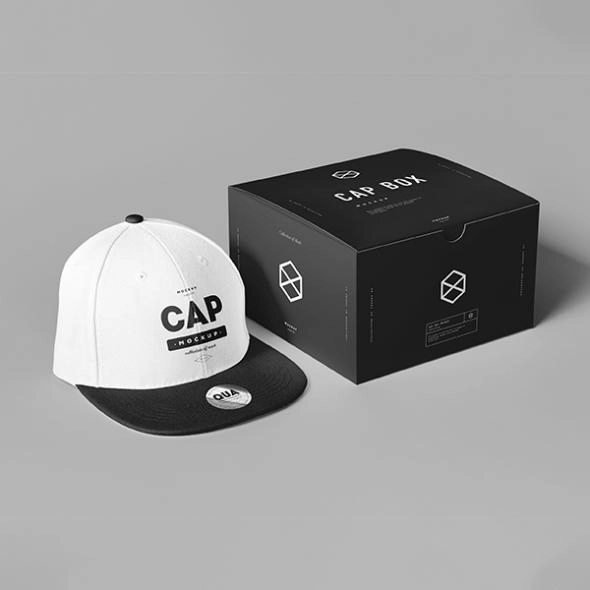
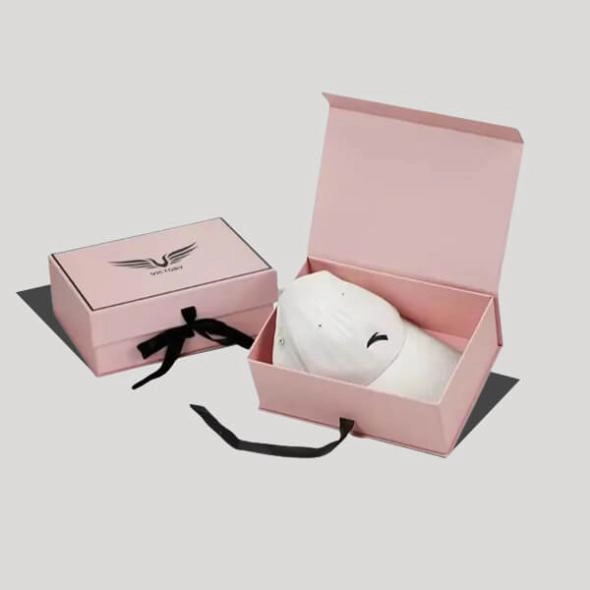
Baseball cap boxes are usually rectangular and relatively shallow. They stack well, fit on retail shelves, and ship efficiently. Custom cap boxes in this format suit brands that release multiple colors of the same style.
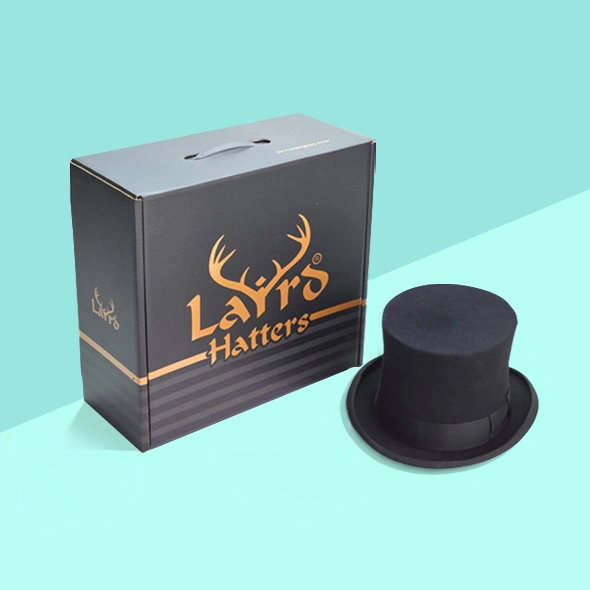
Round and tall boxes suit fedoras, bucket hats, and other structured headwear that needs vertical space. A lid-and-base construction works well for gifts and premium presentation, since the lid lifts off cleanly. Tuck-end and folding styles keep costs lower for standard retail.
Window Boxes and Product Visibility
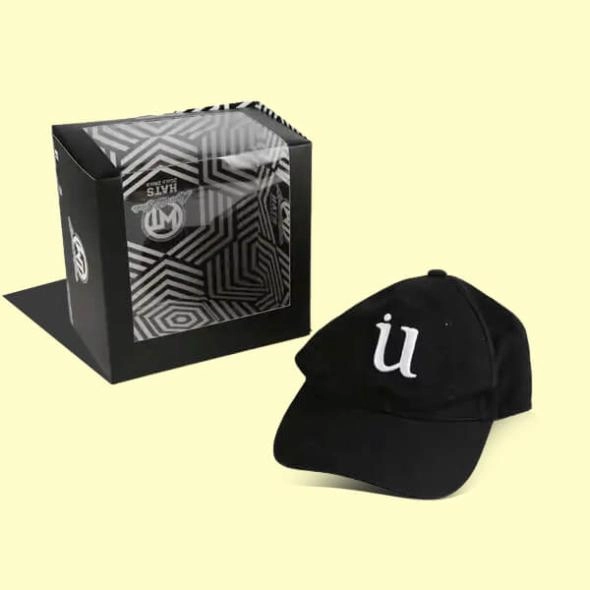
A window lets customers see the hat’s color and material without opening the box. That helps in a store where shoppers can’t try the product on straight away, and it helps sell hats where color is the main selling point.
Windows work best on lighter boxes where a cutout won’t weaken the structure. For fragile or high-value hats, a fully printed box with an image of the product is often safer.
Custom Printing and Branding Options
Printed hat boxes turn packaging into a branding tool. The goal is a box that looks consistent with the hat and the label on it.
Custom Logo and Artwork
Hat boxes with logo placement work best when the design suits the box shape. A centered logo on the lid is common for rectangular boxes. On a round box, a logo on the lid with a smaller mark on the side keeps the design readable from several angles.
Keep artwork simple on small panels. Provide vector files for the logo so it prints sharply, and include any brand colors by name or code.
Colors and Printing Options
Full-color printing suits detailed graphics, patterns, and photography. One-color or two-color printing works well for minimal designs, especially on kraft. Solid brand colors need careful matching, so ask about proofs before approving a full run.
Dark boxes with light print look sharp but can show scuffs in handling. Light boxes hide wear better but may need heavier coverage to feel branded.
Finishing Options
Matte finishes give a soft, modern look and hide fingerprints. Gloss finishes make colors look brighter and add some surface protection. Spot UV adds shine to selected areas such as a logo.
Foil stamping, embossing, and debossing add texture and a premium feel. They work best on simple designs with bold shapes. Ask which finishes are available for your chosen board and box style.
Custom Hat Boxes for Different Industries
Different sellers use hat packaging for different reasons. Here is how the most common buyers approach it.
Apparel and Streetwear Brands
These brands often release caps in drops, so box design helps build anticipation. Consistent box sizes make storage and fulfillment easier, and printed lids can carry collection names or numbering.
Small Businesses and Startup Brands
A new hat label has to make a small run look polished. Simple one-color printing and standard sizes can keep costs reasonable while still giving the product a branded look. Start with a smaller quantity, learn what sells, and adjust the design later.
Ecommerce Businesses
Online sellers need boxes that protect hats during shipping and survive handling. Many pair a branded inner box with a shipping carton, so the unboxing feels intentional and the hat arrives intact. Strength matters more here than shelf appeal.
Promotional and Corporate Merchandise
Companies ordering branded caps for staff, events, or customers often want a box that keeps the order tidy and looks professional when handed out. Printed hat boxes with a logo also suit uniform programs and sports teams.
Wholesale Hat Boxes Packaging
Hat boxes wholesale orders make sense once you have steady demand or a product line that repeats. Ordering larger quantities usually lowers the cost per box and keeps packaging consistent across seasons.
Benefits of Ordering Packaging in Bulk
Bulk orders give you matching boxes for every hat, which matters when a retail partner expects consistency. They also reduce the risk of running out during a busy period and of repeating design approvals each time you reorder.
Buying in volume works best when your size and design are settled. If you are still testing sizes or artwork, a smaller order is safer.
Choosing the Right Order Quantity
Look at how many hats you sell in a typical quarter, then add a buffer for growth. Consider storage space too. Flat-packed folding boxes take little room, while rigid or tall boxes need more.
Think about whether you will add new colors or styles soon. If you will, avoid locking all your budget into a single design.
How to Choose the Right Custom Hat Boxes
A good choice comes down to four decisions. Work through them in order and the right box becomes clear.
Consider Your Product Dimensions
Measure each hat style you plan to sell. Account for brim shape, crown height, and any trim or tags. Confirm the box allows the hat to rest naturally without pressing on the crown.
Choose the Right Material and Style
Match the box to how the hat will be sold. A folding paperboard box suits retail displays. A sturdier lid-and-base or round box suits gifts, premium hats, and shipped orders.
Match Packaging With Your Brand
Choose colors, finishes, and print style that echo the hat itself. A rugged outdoor brand and a luxury hat label should not share the same packaging look. Keep the logo placement consistent across all your boxes.
Consider Retail and Shipping Requirements
Retail boxes should stack neatly and read clearly on a shelf. Shipping boxes should resist crushing and moisture. If a box has to do both jobs, favor strength first and add presentation through printing and finish.