




QR codes on packaging have become essential marketing tools for businesses across the United States. These small, scannable squares bridge the gap between physical products and digital experiences. American consumers now expect interactive packaging that provides instant information, exclusive offers, and engaging content.
Smart businesses recognize that packaging does more than protect products. It serves as a powerful marketing channel that drives website traffic, builds customer loyalty, and provides valuable data. QR codes unlock these opportunities affordably and effectively.
This comprehensive guide shows you exactly how to use QR codes on packaging successfully. Whether you run a startup in Austin or an established company in New York, these strategies will help you leverage QR technology for business growth. Custom Boxes Zone specializes in printing high-quality QR codes on custom packaging for American brands.
What Are QR Codes and How Do They Work?
Understanding QR Code Technology
QR codes, or Quick Response codes, are two-dimensional barcodes that store information digitally. Users scan them with smartphone cameras to instantly access websites, videos, contact information, or special offers. Unlike traditional barcodes, QR codes hold significantly more data and work from any angle.
The technology originated in Japan but has exploded across the United States in recent years. Modern smartphones have built-in QR readers, eliminating the need for special apps. This convenience drives adoption among American consumers of all ages.
How QR Codes Function:
- Store up to 4,296 alphanumeric characters
- Scan instantly with any smartphone camera
- Direct users to specific web destinations
- Track scans for marketing analytics
- Work even when partially damaged or obscured
Why QR Codes Matter for US Packaging
American consumers increasingly demand transparency and engagement from brands. They want to know product origins, ingredients, sustainability practices, and brand stories. QR codes deliver this information instantly without cluttering package designs.
For businesses, QR codes provide direct marketing channels that bypass algorithm-controlled social media. You own the customer relationship and data. This control becomes increasingly valuable as digital advertising costs rise across the US market.
Benefits of Adding QR Codes to Your Packaging
Enhanced Customer Engagement
QR codes transform passive packaging into interactive brand experiences. Customers scan codes to watch product demonstrations, read customer reviews, or explore complementary products. This engagement builds stronger connections than static packaging alone.
US consumers appreciate brands that provide value beyond the product itself. Tutorial videos, recipe ideas, or styling suggestions accessed through QR codes enhance customer satisfaction and encourage repeat purchases.
Engagement Opportunities:
- Product demonstration videos
- User-generated content galleries
- Behind-the-scenes brand stories
- Interactive games and contests
- Exclusive member communities
- Personalized product recommendations
Direct Marketing Channel
Every product package becomes a marketing asset when it includes QR codes. You can drive traffic to your website, build email lists, or promote new product launches. Unlike paid advertising, this marketing channel costs almost nothing after initial setup.
American brands use QR codes to offer first-time buyer discounts, loyalty program signups, or limited-time promotions. These strategies convert one-time buyers into repeat customers effectively.
Valuable Customer Data and Analytics
QR codes provide insights impossible to gather from traditional packaging. Track scan rates, locations, times, and devices used. This data reveals which products generate most interest and where customers engage with your brand.
US businesses leverage this information to refine marketing strategies, optimize product placement, and understand customer behavior patterns. Analytics transform guesswork into data-driven decision making.
Product Authentication and Anti-Counterfeiting
Counterfeit products cost American businesses billions annually. QR codes with unique identifiers help customers verify product authenticity instantly. This protection builds trust and safeguards brand reputation.
Luxury brands, cosmetics companies, and supplement manufacturers throughout the US increasingly use QR verification systems. Customers appreciate the transparency and security these systems provide.
Sustainability and Environmental Benefits
QR codes reduce the need for printed instruction manuals, warranty cards, and promotional inserts. This minimizes paper waste while providing more detailed information digitally. Eco-conscious American consumers value brands that embrace sustainable practices.
Additionally, QR codes enable digital product registrations, eliminating paper forms. This streamlines processes while supporting environmental responsibility.
Types of QR Codes for Packaging
Static QR Codes
Static QR codes contain fixed information that never changes. Once printed, the destination remains permanent. These work well for unchanging content like company websites, social media profiles, or product certifications.
Best Uses for Static Codes:
- Main website homepage links
- Social media profile pages
- Product registration forms
- Contact information
- Fixed promotional pages
Dynamic QR Codes
Dynamic QR codes allow you to change the destination URL without reprinting packaging. This flexibility proves invaluable for seasonal promotions, limited-time offers, or updating product information. The QR code image stays the same while the linked content evolves.
US brands prefer dynamic codes for their versatility. Update landing pages for holidays, special events, or new product launches without redesigning packaging.
Advantages of Dynamic Codes:
- Change destinations anytime
- Track detailed scan analytics
- A/B test different landing pages
- Schedule seasonal content changes
- Update information without reprinting
Landing Page QR Codes
These codes direct scanners to custom landing pages optimized for mobile viewing. Create pages specifically for packaging campaigns with clear calls-to-action, product information, and conversion opportunities.
American consumers expect mobile-friendly experiences. Landing pages designed for small screens convert better than generic website homepages.
Social Media QR Codes
Drive followers to Instagram, Facebook, TikTok, or LinkedIn profiles directly. Social media codes help build your following while encouraging user-generated content and community engagement.
US brands particularly leverage Instagram and TikTok QR codes to reach younger demographics. Encouraging customers to share unboxing experiences creates authentic marketing content.
Video QR Codes
Link directly to YouTube demonstrations, brand stories, or product tutorials. Video content engages customers more effectively than text alone. American consumers increasingly prefer video information over reading lengthy descriptions.
Popular Video Content:
- Product assembly instructions
- Recipe demonstrations for food products
- Skincare routine tutorials
- Brand origin stories
- Customer testimonial compilations
App Download QR Codes
Direct customers to download your branded mobile app from Apple App Store or Google Play Store. Apps deepen customer relationships and enable push notifications for promotions and updates.
Major US retailers use app download QR codes to transition customers from one-time buyers to engaged community members.
Best Practices for QR Codes on US Packaging
Optimal Size and Placement
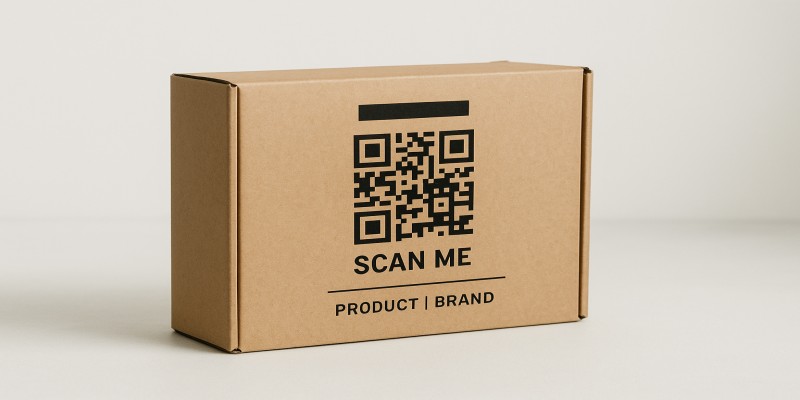
QR codes must be large enough for easy scanning. The minimum recommended size is 0.8 x 0.8 inches, but 1 x 1 inch or larger works better for most packaging. Larger codes scan more reliably, especially in varying lighting conditions.
Place QR codes in prominent, easy-to-access locations. Avoid curved surfaces, seams, or areas that might get damaged. The back panel of boxes often provides ideal placement for visibility without dominating front-facing designs.
Placement Guidelines:
- Avoid package folds and curved edges
- Ensure adequate lighting for scanning
- Keep away from reflective materials
- Position at comfortable scanning height
- Provide clear surrounding space
High Contrast for Reliable Scanning
QR codes need strong contrast between dark and light areas. Traditional black-on-white provides most reliable scanning. However, brand colors work if contrast remains sufficient. Test thoroughly before production.
Avoid low-contrast combinations like light gray on white or dark blue on black. American consumers abandon scanning attempts if codes don't work immediately.
Include Clear Call-to-Action Instructions
Never assume customers know what QR codes do. Add simple text like "Scan for 20% Off Your Next Order" or "Scan to Watch How It Works." Clear instructions increase scan rates dramatically among US audiences.
Position instructions near the QR code where customers naturally look. Use action-oriented language that communicates value immediately.
Effective CTA Examples:
- "Scan for Exclusive Recipes"
- "Get Free Shipping – Scan Now"
- "Watch Tutorial Video"
- "Join Our Rewards Program"
- "Verify Product Authenticity"
Test Before Mass Production
Always test QR codes before printing thousands of packages. Scan codes with multiple smartphone models and in different lighting conditions. Verify landing pages display correctly on mobile devices.
Custom Boxes Zone provides test prints so you can validate QR code functionality before full production runs. This prevents costly mistakes that plague US brands who skip testing.
Mobile-Optimized Landing Pages
Over 85% of QR code scans happen on mobile devices. Your landing page must load quickly and display perfectly on small screens. Slow-loading pages cause American consumers to abandon before engaging.
Use large buttons, clear headlines, and minimal text. Focus on single conversion goals rather than overwhelming visitors with options.
Real Examples from Successful US Brands
Coca-Cola's Interactive Campaigns
Coca-Cola has used QR codes on bottles and cans for promotional campaigns across America. Customers scan codes to enter contests, access exclusive content, or unlock augmented reality experiences. These campaigns generate millions of engagements annually.
Amazon's Package QR Codes
Amazon includes QR codes on packaging for easy returns and product reviews. This convenience enhances customer experience while providing valuable feedback data. The system has become standard across US e-commerce.
Nike's Product Authentication
Nike uses QR codes to combat counterfeiting in the American market. Customers scan codes to verify authenticity and access product care instructions. This builds trust while protecting brand integrity.
Heinz's Recipe Integration
Heinz prints QR codes on ketchup bottles linking to recipe collections. This strategy increases product usage frequency and positions Heinz as more than just a condiment. American families appreciate the added value.
Breweries and Craft Beer Labels
Craft breweries throughout the US use QR codes extensively. Codes link to beer profiles, food pairing suggestions, brewery tour information, and merchandise stores. This engagement builds loyal customer communities.
Design Tips for QR Codes on Packaging
Maintain Brand Consistency
QR codes should complement your overall package design, not clash with it. Use brand colors for the code itself if contrast permits. Integrate codes into your design layout rather than treating them as afterthoughts.
Custom Boxes Zone helps US brands design cohesive packaging where QR codes enhance rather than distract from brand aesthetics.
Add Your Logo or Brand Element
Customize QR codes by placing small logos in the center. This personalization maintains scannability while reinforcing brand identity. Many QR code generators offer logo integration features.
Ensure logos don't exceed 30% of the code area. Larger logos may prevent reliable scanning.
Use Frames and Borders
Frames draw attention to QR codes and provide visual separation from surrounding design elements. Simple borders make codes stand out without appearing out of place.
Consider Seasonal Variations
Create holiday-themed QR codes for special editions. Red and green codes for Christmas packaging or orange codes for Halloween products add festive touches while maintaining functionality.
Printing QR Codes on Custom Packaging
Choose the Right Printing Method
Digital printing provides excellent QR code quality for short and medium runs. Offset printing works well for large production volumes. Both methods produce scannable codes when properly calibrated.
Custom Boxes Zone uses advanced printing technology that ensures consistent QR code quality across all box types. We test every design before production begins.
Material Considerations
Glossy finishes can create glare that interferes with scanning. Matte or satin finishes often perform better for QR codes. If using glossy materials, position codes to minimize reflection issues.
Textured materials require slightly larger codes to maintain scannability. Custom Boxes Zone advises on optimal code sizes for different packaging materials.
Quality Control Standards
Implement quality checks to verify every QR code scans correctly. Random sampling during production catches printing errors before they reach customers. This diligence protects your brand reputation among US consumers.
Marketing Strategies Using Packaging QR Codes
Limited-Time Offers and Promotions
Create urgency with exclusive QR code offers. "Scan within 48 hours for double rewards points" or "Limited-time 25% discount – scan now" drive immediate action from American consumers.
Customer Loyalty Programs
Use QR codes for instant loyalty program enrollment. Customers scan at purchase to automatically receive points, rewards, or exclusive member benefits. This frictionless experience increases program participation.
User-Generated Content Campaigns
Encourage customers to scan codes and share experiences on social media. Offer incentives for posting photos or reviews. User-generated content provides authentic marketing that resonates with US audiences.
Product Education and Tutorials
Educational content builds customer confidence and reduces returns. QR codes linking to assembly instructions, usage tips, or care guidelines enhance customer satisfaction across America.
Cross-Selling and Upselling
Show customers complementary products through QR code landing pages. "Pairs perfectly with..." suggestions increase average order values while providing helpful recommendations.