




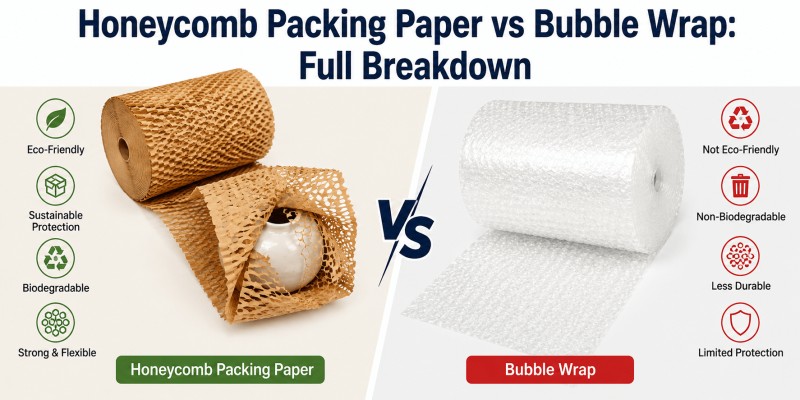
When it comes to shipping fragile products safely, the packaging material you choose can make or break your customer's experience. Two of the most talked-about cushioning solutions in the packaging industry today are honeycomb packing paper and bubble wrap. Both protect your products during transit, but they work very differently, cost differently, and impact the environment in opposite ways.
What Is Honeycomb Packing Paper?
Honeycomb packing paper is a modern, eco-friendly cushioning material made from kraft paper. Its name comes from the distinctive hexagonal cell structure that forms when the paper is expanded, just like the inside of a beehive. This unique design gives the material incredible strength and flexibility despite being extremely lightweight. The material starts as flat sheets of kraft paper, which are die-cut and then expanded to create thousands of interlocking hexagonal cells. These cells work together to absorb impact, distribute pressure evenly, and cradle fragile items during shipping.
Honeycomb packing paper is 100% recyclable, biodegradable, and made from renewable resources, making it one of the most sustainable protective packaging materials available today.
Common uses include:
- Wrapping glassware, ceramics, and fragile home goods
- Protecting electronics and tech accessories
- Void-filling inside custom shipping boxes
- E-commerce packaging for cosmetics and beauty products
- Wrapping handmade or artisan products
What Is Bubble Wrap?
Bubble wrap is one of the most recognized packaging materials in the world. Made from polyethylene plastic, it features rows of small air-filled pockets or "bubbles" that act as a cushion against shock and impact during shipping and handling.
Bubble wrap has been the go-to protective packaging material for decades. It is lightweight, easy to use, and provides excellent cushioning for a wide range of products. However, it is made entirely from plastic, and in today's world, that comes with serious environmental and business consequences.
Common uses include:
- Wrapping small, fragile items like electronics and collectibles
- Lining the inside of shipping boxes
- Protecting temperature-sensitive products due to its insulating properties
- Cushioning items with irregular or delicate shapes
Honeycomb Packing Paper vs Bubble Wrap: Full Comparison
Protection and Cushioning
Both materials offer strong protection, but in different ways.
Honeycomb packing paper creates a 3D structure that molds and wraps snugly around the item being packed. The interlocked hexagonal cells distribute impact energy across the entire surface of the product, reducing the risk of cracks or breaks. It is particularly effective for items with sharp edges, corners, or irregular shapes because the paper naturally stretches and conforms around the product. Bubble wrap cushions through air-filled pockets. The bubbles compress on impact to absorb shock. While this works well for smooth or standard-shaped items, bubble wrap can sometimes shift or deflate mid-transit, leaving products less protected than expected, especially on long-distance shipments.
Verdict: Honeycomb Packing Paper wins for consistent 3D protection and ability to conform to any product shape.
Eco-Friendliness and Sustainability
This is where the two materials differ the most and where the future of packaging is being decided.
Honeycomb packing paper is made from kraft paper, a natural, renewable, and biodegradable material. It breaks down quickly in the environment, can be recycled alongside regular paper waste, and is even compostable. For businesses committed to sustainable packaging, honeycomb paper is the clear choice. Bubble wrap is made from plastic (polyethylene). While some types of bubble wrap are technically recyclable, the process is complicated. It cannot go into regular curbside recycling bins, requires specialized drop-off facilities, and in most cases ends up in a landfill. Plastic takes hundreds of years to decompose and contributes to environmental pollution, ocean waste, and microplastic contamination. As governments around the world introduce plastic packaging taxes and stricter regulations, businesses relying on bubble wrap face increasing compliance costs and risks.
Verdict: Honeycomb Packing Paper is the clear winner, the only genuinely eco-friendly option.
Cost and Value for Money
At first glance, bubble wrap can appear cheaper, especially when purchased in bulk rolls. However, when you look at the full cost picture, honeycomb packing paper often delivers better value for money overall.
Because honeycomb packing paper conforms tightly to the product, less material is needed per package. Tighter, more efficient packing also results in smaller box sizes, which directly reduces your shipping costs per order. Over hundreds or thousands of shipments, these savings add up significantly. Bubble wrap, being bulkier and less space-efficient, can increase box size requirements and therefore shipping fees. The cost savings at the point of purchase are often cancelled out by higher freight costs down the line.
Verdict: Honeycomb Packing Paper delivers better long-term value when total packaging and shipping costs are factored in.
Storage and Space Efficiency
Bubble wrap rolls are notoriously bulky. They take up a large amount of warehouse or storage space, which is a real operational problem for businesses with limited space.
Honeycomb packing paper starts as flat, compact rolls or sheets before being expanded at the point of use. It takes up significantly less storage space than pre-filled bubble wrap. This means you can store more packaging material in the same footprint, improving warehouse efficiency and reducing overhead costs.
Verdict: Honeycomb Packing Paper is far more compact and storage-friendly.
Ease of Use
Both materials are easy to use, but in slightly different ways.
Honeycomb packing paper can be torn by hand; no scissors or cutting tools required. Pull the paper, wrap it around your item, and the material will naturally expand and lock into shape around the product. It is quick, clean, and highly efficient for busy packing stations. Bubble wrap is also a simple to use wrap, fold, and secure with tape. However, cutting large sheets from a roll can require tools, and handling bulky rolls in a fast-paced packing environment can slow things down.
Verdict: Tie, both are easy to use, with honeycomb paper having a slight edge thanks to its hand-tear capability and faster wrapping speed.
Brand Image and Unboxing Experience
In the age of social media and unboxing videos, the packaging experience is part of your brand identity. Customers film and share their unboxing moments, and your packaging is on display.
Honeycomb packing paper has a clean, premium, natural aesthetic that instantly communicates sustainability, quality, and care. It signals to customers that your brand is thoughtful and responsible, qualities that modern shoppers actively seek out and reward with loyalty. Bubble wrap looks generic and plasticky. It adds no visual value to the unboxing experience and, for an increasingly eco-conscious customer base, it can actually create a negative impression of your brand.
Verdict: Honeycomb Packing Paper creates a far better unboxing experience and actively strengthens your brand image.
Limitations to Be Aware Of
No packaging material is perfect. Here is an honest look at the limitations of both:
Honeycomb Packing Paper Limitations:
- Not ideal for very high-humidity environments, as moisture can weaken the kraft paper structure
- Higher upfront unit cost compared to basic bubble wrap (though offset by savings in shipping and material usage)
- Provides less thermal insulation than bubble wrap for temperature-sensitive products
Bubble Wrap Limitations:
- Made from non-biodegradable plastic with serious environmental consequences
- Bubbles can pop or deflate during transit, reducing protection
- Bulky and space-inefficient in storage
- Increasingly subject to plastic packaging regulations and taxes worldwide
- Creates a negative brand impression among eco-conscious customers
Which One Should Your Business Choose?
For most modern businesses, honeycomb packing paper is the smarter, more future-proof choice. Here is a simple breakdown:
Choose Honeycomb Packing Paper if:
- You sell fragile products like glassware, ceramics, electronics, or cosmetics
- Sustainability and eco-friendly packaging matter to your brand and customers
- You want to improve your unboxing experience and strengthen brand perception
- You are looking to reduce overall packaging and shipping costs in the long run
- You want packaging that aligns with tightening environmental regulations
Choose Bubble Wrap if:
- You need strong thermal insulation for temperature-sensitive products
- You are shipping smooth, regularly shaped items in very high volumes at minimal short-term cost
- You have extremely tight budget constraints in the immediate term
Why This Decision Matters More Than Ever in 2025
Today's customers are more environmentally aware than ever before. Businesses that switch to eco-friendly packaging like honeycomb packing paper are not only doing the right thing for the planet, but they are also positioning themselves ahead of the curve in terms of regulation, consumer demand, and brand reputation. Packaging is no longer just about protecting a product. It is about protecting your brand, your customer relationships, and your long-term business growth.
At CustomBoxesZone, we offer a wide range of sustainable, high-quality custom packaging solutions, including custom-printed boxes, eco-friendly inserts, and protective packaging materials tailored to your exact business needs and budget.
Final Verdict
Both honeycomb packing paper and bubble wrap protect products during shipping. But in every category that matters to a growing, modern business, protection quality, sustainability, brand image, storage efficiency, and long-term cost, honeycomb packing paper wins. If your business is still relying on bubble wrap, 2025 is the year to make the switch. Your customers will notice the difference. Your shipping costs will reflect the savings. And your brand will be better for it.
Ready to upgrade your packaging? Explore CustomBoxesZone's full range of protective and sustainable packaging solutions today. Get custom shipping boxes, eco-friendly inserts, and premium protective wrapping all tailored to your brand.
Visit CustomBoxesZone.com and get your free quote today.