




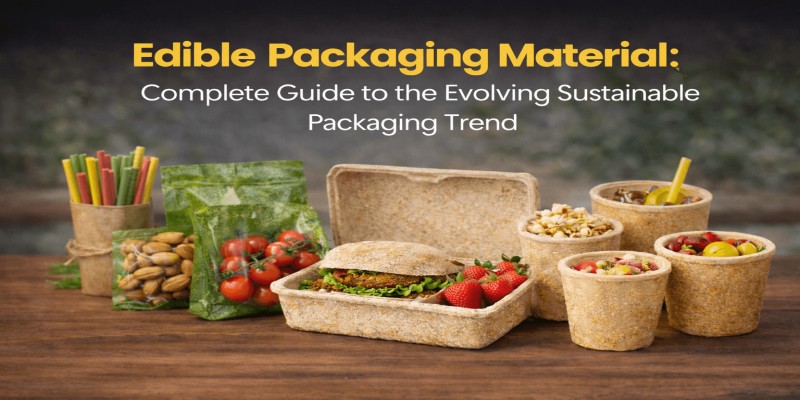
The packaging industry is going through a major transformation. As environmental concerns grow and consumer awareness rises, businesses are actively searching for smarter and cleaner alternatives to traditional plastic packaging. One of the most exciting innovations leading this shift is edible packaging material. From custom edible food packaging boxes to biodegradable food films, this sustainable packaging trend is rapidly evolving and for good reason. According to Market Research Future, the edible packaging market size was valued at around USD 1.6 billion in 2023 and is projected to grow at a CAGR of 5.93% through 2032. These numbers confirm that edible packaging material is not just a passing trend; it is the future of sustainable food packaging. This complete guide covers everything you need to know about edible packaging material, what it is, how it is made, its popular forms, current trends, and why your business should consider making the switch today.
What Is Edible Packaging Material and Why Does It Matter?
Edible packaging material is exactly what it sounds like: a food-safe material used to create packaging that can be safely consumed alongside the food product it protects. It is made from natural, plant-based sources such as seaweed, casein, rice paper, potato starch, fruit peels, and algae. Any film, coating, sheet, or container crafted from these sourcesthatd qualifies as food-safe and biodegradable falls under the category of edible packaging material.
What makes edible packaging material truly matter is its dual benefit. First, it protects food from contamination, oxidation, moisture, and external damage just like conventional packaging. Second, it eliminates packaging waste because it can either be eaten or naturally biodegraded without leaving any toxic residue behind.
Unlike plastic packaging, which contributes to over 30% of solid waste in the United States alone, according to the EPA, edible packaging material creates zero lasting environmental impact. This makes it one of the most powerful sustainable packaging solutions available today for food businesses, pharmaceutical companies, and cosmetic brands.
Types of Edible Packaging Material Used in Custom Edible Packaging
Understanding the raw materials behind edible packaging helps businesses make informed sourcing decisions. Edible packaging material is primarily derived from two categories of natural sources.
The first is casein,n a protein derived from milk that gives it its white color. Casein-based edible packaging material is remarkably effective, reportedly around 500 times better at blocking oxygen than conventional plastic films, according to research supported by the U.S. Department of Agriculture and the American Chemical Society. This makes casein an exceptional edible packaging material for preserving food freshness and extending shelf life significantly.
The second category covers plant-based edible packaging materials, which include a wide range of natural sources. Seaweed and algae are among the most popular due to their natural barrier properties and rapid biodegradability. Potato starch is widely used to create bioplastic films and single-use sachets. Fruit peel extracts from pomegranate and pineapple, plant-based oils like cinnamon and citrus oil, and rice paper are also commonly incorporated into custom edible food packaging.
These edible packaging materials are processed into flexible films and sturdy sheets using natural polymers and bio-based plasticizers such as glycerol, sorbitol, and mannitol, which improve the flexibility and durability of the final packaging product without compromising its edible or biodegradable properties.
How Is Edible Packaging Material Processed? Step-by-Step Guide
The manufacturing process of custom edible packaging follows a carefully controlled series of steps to ensure safety, consistency, and performance at every stage.
It begins with selecting the right edible packaging material based on the type of food product being packaged. Natural polymers are dissolved in water or other food-safe solvents to create a film-forming solution. Plasticizers are then carefully blended to achieve the desired flexibility and strength of the edible film.
Once the solution is prepared, it is cast onto flat surfaces or poured into molds to achieve specific shapes and thicknesses. The cast solution is then dried using ovens, air dryers, or vacuum dryers. After complete drying, the edible packaging material is cut into desired shapes and sizes,s ready to be formed into edible packaging boxes, wraps, cups, or other packaging products.
Storage is a critical final step. Since edible packaging material is sensitive to temperature, humidity, and environmental conditions, it must be stored carefully to maintain its integrity and food-safe properties before use.
Popular Forms of Custom Edible Packaging Boxes and Products
One of the most exciting aspects of edible packaging material is the sheer variety of forms it can take. Custom edible packaging today goes far beyond basic food wraps. Here are the most popular and innovative forms currently shaping the edible packaging market.
Edible Cups
Are made from cookie or wafer-based edible packaging material coated in flavors like vanilla, chocolate, or caramel. They maintain their structure for up to an hour when in contact with liquid, making them a practical and enjoyable alternative to disposable paper cups.
Edible Straws
Are crafted from natural edible packaging materials like rice flour, tapioca starch, and vegetable colors. They last long enough to enjoy a full beverage and can be eaten afterward or biodegraded within 100 days, ys serving as an excellent sustainable alternative to plastic and paper straws.
Edible Spoons
Made from wheat, rice, and sorghum-based edible packaging material are strong enough to handle full meals without degrading mid-use. They are fully vegan, free from trans fats and preservatives, and designed as a direct replacement for the over 40 billion plastic utensils used annually in the United States.
Edible Bottles
Like the Ooho bottle developed by Skipping Rocks Lab use a double membrane of sodium alginate and calcium chloride, ide both food-safe edible packaging materials, to hold liquid in a transparent, spherical, fully consumable container that leaves absolutely no waste behind.
Eco-Bags
Made from cassava root, seaweed, and potato starch, edible packaging materials are fully biodegradable and safe for consumption, making them a remarkable step forward in reducing plastic bag pollution globally.
Edible Food Film
Developed from plant-based edible packaging materials like konjac flour, starch, and cellulose offers superior food preservation, better shelf life, and complete biodegradability compared to conventional plastic wraps.
Wafer Paper
Made from potato starch, rice, vegetable oils, and water is a crisp, translucent, and fully edible packaging material widely used in the food and confectionery industry for decorative and functional packaging purposes.
Edible Packaging Boxes:s Trends and Designs Shaping the Industry
The edible packaging material industry is not just growing in volume; it is evolving rapidly in design, functionality, and creative application. Here are the key edible packaging boxes trends and designs currently defining the market.
Flavor Integrated Edible Packaging Material
Is one of the biggest trends right now. Brands are designing edible packaging material that complements the taste of the food inside, I think, such as chocolate-coated edible cups for coffee or fruit-flavored straws for juices. This creates a fully immersive eating experience that adds real value for consumers beyond just sustainability.
Transparent and Minimalist Edible Films
Are gaining popularity among premium food brands that want their edible packaging material to be visually clean and modern while remaining completely sustainable and consumable.
Custom Edible Packaging with Brand Printing
Is emerging as a powerful marketing tool. Edible inks and food-safe printing methods now allow brands to print logos, product information, and custom designs directly onto edible packaging material surfaces, turning every wrap into a fully branded customer experience.
Single Serve Edible Sachets and Pouches
Made from dissolvable edible packaging material are trending in the condiment, seasoning, and pharmaceutical sectors, eliminating single-use plastic sachets with a smarter, safer alternative.
Seaweed-Based Edible Packaging Material Designs
Continue to dominate sustainability conversations due to seaweeds' rapid natural growth rate, zero agricultural input requirements, and complete biodegradability after use.
Why Your Business Should Switch to Custom Edible Food Packaging
Adopting custom edible food packaging built from quality edible packaging material delivers clear and measurable benefits for food businesses of all sizes.
It directly meets the growing customer demand for sustainable and eco-friendly packaging. Consumers today actively choose brands that demonstrate real environmental responsibility,y and switching to edible packaging material is one of the strongest sustainability signals a food business can send to its audience.
It reduces packaging waste to virtually zero. Since edible packaging material is either consumed or biodegraded naturally, businesses contribute far less to landfill overflow and plastic pollution compared to businesses that still rely on conventional packaging.
It preserves food quality more effectively. The barrier properties of edible packaging material prevent oxidation, moisture absorption, and contamination, keeping food fresher for longer without the need for synthetic preservatives or additional packaging layers.
It also opens powerful branding opportunities. Custom edible packaging material can be shaped, flavored, colored, and printed to reflect your brand identity, creating a memorable and unique customer experience that sets your food business apart in a competitive market.
Challenges of Edible Packaging Material Worth Knowing
While the benefits are compelling, edible packaging material does come with some challenges that businesses should understand before making the switch.
Manufacturing costs for edible packaging material are currently higher than conventional packaging due to the specialized sourcing and processing involved. Temperature and humidity sensitivity also require more careful storage and shipping conditions, which can add logistical complexity for some businesses.
Consumer familiarity with edible packaging material is still developing. Many people are accustomed to discarding packaging without a second thought, so educating customers about the consumable and biodegradable nature of edible packaging material is an important part of the brand transition.
The Future of Edible Packaging Material Is Already Here
The future of edible packaging material is not a distant possibility; it is already unfolding across industries worldwide. With governments increasing sustainability regulations, consumers demanding greener choices, and technology rapidly advancing the capabilities of edible packaging materials, the market is on a clear growth trajectory through 2032 and well beyond.
Businesses that invest in custom edible packaging material today position themselves ahead of the curve, building genuine brand trust, reducing environmental impact, and meeting the evolving expectations of a more conscious and informed consumer base.
If you are ready to explore custom edible food packaging boxes and sustainable edible packaging material solutions for your food business, now is the right time to make the move. The trend is growing, the technology is proven, and the market is ready for brands willing to lead the change toward a cleaner, greener future.