






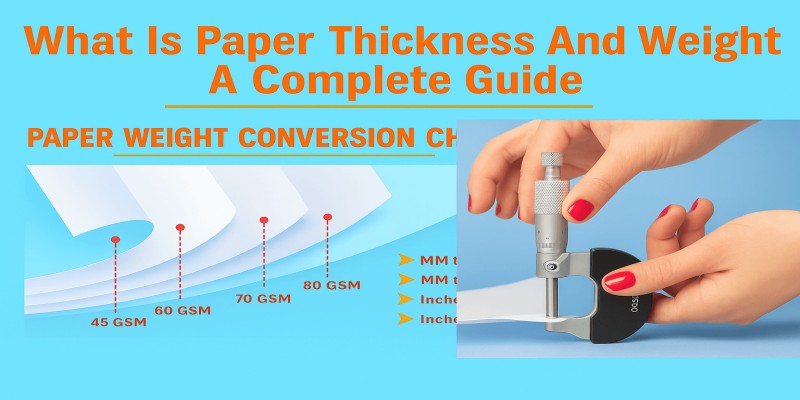
Choosing the right paper can make or break your project. Whether you're designing custom packaging, printing business cards, or creating marketing materials, understanding paper thickness and weight helps you make smart decisions that affect durability, printing quality, and costs.
What is Paper Weight?
Paper weight refers to how heavy and thick a sheet of paper is. Think of it like the difference between tissue paper and cardboard; both are paper, but they feel completely different because of their weight and thickness.
Paper weight determines several important factors, including how durable the paper is, how it feels when you touch it, how well it prints, whether it tears easily, and how much protection it provides for products inside packaging.
In the United States and globally, paper weight is measured using different units depending on where you are and what industry you work in. Understanding these measurements helps you communicate clearly with printers, packaging manufacturers, and suppliers.
Understanding Paper Weight Measurements

GSM (Grams Per Square Meter)
GSM is the most common measurement worldwide. It tells you how much one square meter of paper weighs in grams. This measurement is simple because it's always based on the same size (one square meter), making it easy to compare different papers.
For example, 80 GSM paper is light and thin, similar to standard copy paper. 300 GSM paper is thick and sturdy, like business cards or postcard stock. The higher the GSM number, the thicker and heavier the paper.
Common GSM Ranges:
- 35-55 GSM: Very thin paper for newspapers or tissue
- 80-120 GSM: Standard office paper and lightweight printing
- 150-250 GSM: Brochures, flyers, and magazine covers
- 250-400 GSM: Business cards, postcards, and sturdy packaging
- 400-700 GSM: Premium packaging boxes and rigid materials
PT (Points)
Points measure paper thickness directly. One point equals one-thousandth of an inch (0.001 inch). So 10 PT paper is 0.010 inches thick.
This measurement is popular in the printing and packaging industries in the United States. When someone mentions "10-point cardstock," they're talking about thickness, not weight. The point system helps you visualise exactly how thick your paper will be.
MM (Millimetres)
Millimetres measure paper thickness in the metric system. This unit is straightforward if the paper is 0.35 mm thick, you can easily visualise that measurement with a ruler.
Many international manufacturers use millimetres because they're easy to measure and understand. Converting between millimetres and other units is simple with the right formulas.
Pounds (lbs)
In the United States, you will often see paper weight listed in pounds. This measurement can be confusing because it's based on the weight of 500 sheets (a ream) of paper in its basic size, and that basic size varies depending on paper type.
For example, 20 lb bond paper and 50 lb text paper might actually be similar weights because they're measured using different base sheet sizes. This is why GSM has become more popular—it eliminates this confusion.
Inches
Sometimes, thickness is simply measured in inches or fractions of inches. This is the most intuitive measurement for many Americans, but requires decimals for thin papers (like 0.003 inches).
How to Convert Between Paper Weight Units
Understanding conversions helps you compare papers from different suppliers or countries.
Converting MM to PT (Points)
Formula: 1 millimeter = 2.83465 points
Example: If your paper is 0.35 mm thick: 0.35 × 2.83465 = 0.99 PT (approximately 1 PT)
Converting Inches to PT
Formula: 1 inch = 72 points
Example: If your paper is 0.010 inches thick: 0.010 × 72 = 0.72 PT
Converting MM to Inches
Formula: 1 millimeter = 0.03937 inches
Example: If your paper is 0.50 mm thick: 0.50 × 0.03937 = 0.01969 inches (approximately 0.020 inches)
Understanding GSM to Thickness
GSM doesn't directly convert to thickness because different paper types have different densities. A 300 GSM glossy coated paper might be thinner than 300 GSM uncoated paper because the coating adds weight without adding much thickness.
However, you can estimate using this relationship: GSM = (Paper Density × Thickness in MM) / 1000
Paper Types and Their Standard Weights
Different paper types are manufactured in specific weight ranges based on their intended uses.
Kraft Paper
Kraft paper is a strong, natural-looking brown paper used extensively in packaging. Its unbleached fibres make it eco-friendly and durable.
Common Kraft Paper Weights:
- 45-70 GSM: Lightweight wrapping paper for food, gifts, and products
- 80-120 GSM: Standard kraft for bags, envelopes, and flexible packaging
- 150-250 GSM: Heavy-duty kraft for shopping bags and protective wrapping
- 250+ GSM: Rigid kraft for box manufacturing and structural packaging
Kraft paper's natural strength comes from long wood fibres, making even lighter weights surprisingly durable. This makes Kraft economical—you get good protection without needing the heaviest weights.
Cardboard and Paperboard
Cardboard covers a range of thick paper materials used primarily for packaging boxes.
White Cardboard Weights:
- 190-250 GSM: Lightweight boxes for cosmetics, food, and retail products
- 250-350 GSM: Standard packaging boxes with good structural strength
- 350-450 GSM: Heavy-duty boxes for premium products and gifts
- 450-700 GSM: Rigid boxes for luxury packaging and high-end retail
White cardboard has a smooth, bright white surface perfect for printing vibrant colors and detailed graphics. The thickness you choose depends on what you're packaging and how much protection it needs.
Coated Art Paper
Coated papers have a smooth finish applied to one or both sides, making them ideal for high-quality printing.
C1S (Coated One Side):
- 80-170 GSM: Lightweight printed materials with one visible side
- 170-250 GSM: Magazine covers, product labels, and flexible packaging
- 250-400 GSM: Premium packaging where only the outside needs coating
C2S (Coated Two Sides):
- 80-150 GSM: High-quality brochures, catalogs, and flyers
- 150-250 GSM: Magazine pages, marketing materials, and posters
- 250-400 GSM: Premium printed packaging with graphics on both sides
The coating makes colors more vibrant and images sharper, but adds weight and cost. Choose C1S when only one side is visible to save money while maintaining quality.
Complete Paper Weight Conversion Chart
 This comprehensive chart helps you convert between different measurement units quickly:
| GSM | MM (Millimetres) | PT (Points) | Inches |
|---|---|---|---|
| 45 | 0.76-0.81 | 3.00-3.14 | 0.030-0.032 |
| 60 | 0.80-0.85 | 2.75-3.35 | 0.032-0.033 |
| 80 | 0.06-0.09 | 2.36-3.50 | 0.002-0.004 |
| 100 | 0.08 | 3.14 | 0.003 |
| 120 | 0.10-0.17 | 3.93-6.69 | 0.004-0.007 |
| 150 | 0.13 | 5.11 | 0.005 |
| 180 | 0.16 | 6.29 | 0.006 |
| 200 | 0.18 | 7.08 | 0.007 |
| 250 | 0.25-0.35 | 9.84-13.77 | 0.010-0.014 |
| 300 | 0.32-0.42 | 12.59-16.53 | 0.013-0.017 |
| 350 | 0.36-0.49 | 14.17-19.29 | 0.014-0.019 |
| 400 | 0.43-0.56 | 16.92-22.04 | 0.017-0.022 |
| 450 | 0.60 | 23.62 | 0.024 |
| 500 | 0.67 | 26.37 | 0.026 |
Note: Ranges exist because different paper types at the same GSM can have different thicknesses based on density and coating.
How to Choose the Right Paper Weight
Selecting the correct paper weight depends on your specific application and requirements.
For Packaging Boxes
Lightweight Products (Cosmetics, Small Items): Use 250-300 GSM cardboard. This provides adequate protection while keeping costs reasonable and shipping weights down.
Standard Retail Products: Use 300-400 GSM cardboard. This offers good structural strength, stacks well on shelves, and protects products during shipping.
Premium or Heavy Products: Use 400-700 GSM rigid board. This creates luxury packaging that feels substantial and provides maximum protection.
For Printing Projects
Flyers and Handouts: Use 80-120 GSM paper. Lightweight enough to be economical but substantial enough not to feel cheap.
Brochures and Booklets: Use 150-200 GSM for covers and 80-120 GSM for interior pages. This creates a professional feel with good durability.
Business Cards and Postcards: Use 300-400 GSM cardstock. This creates cards that feel premium and withstand handling without bending.
For Wrapping and Protection
Gift Wrapping: Use 45-80 GSM kraft or decorative paper. Thin enough to fold and wrap easily but strong enough not to tear.
Product Protection: Use 80-150 GSM kraft paper. Provides cushioning and protection without excessive weight or cost.
Heavy-Duty Wrapping: Use 150-250 GSM kraft. For items needing substantial protection or wrapping that won't tear during handling.
Practical Tips for Working with Different Paper Weights
Printing Considerations
Thicker papers (250+ GSM) may require special printer settings or professional printing equipment. Check with your printer before ordering.
Heavier papers absorb ink differently from lightweight papers. Test prints help ensure colors appear as expected.
Very thin papers (under 80 GSM) can jam in printers or show ink bleeding through to the other side.
Folding and Scoring
Papers over 200 GSM usually need scoring before folding to prevent cracking. Scoring creates a compressed line that guides the fold.
The thicker the paper, the more critical proper scoring becomes. Professional printers have equipment to score heavy papers correctly.
Shipping and Handling
Heavier papers increase shipping costs but reduce product damage. Calculate the balance between protection and shipping expenses.
Very lightweight packaging (under 200 GSM) may not survive rough handling during delivery, leading to customer complaints and returns.
Environmental Considerations
Thicker papers use more raw materials. Choose the minimum weight that meets your protection and quality needs to reduce environmental impact.
Kraft and uncoated papers are generally more recyclable than heavily coated papers. Consider this when selecting materials for eco-conscious brands.
Common Mistakes When Selecting Paper Weight
Choosing Too Light: Using 200 GSM when you need 300 GSM saves money initially, but costs more in damaged products and unhappy customers.
Choosing Too Heavy: Using 400 GSM when 250 GSM works fine wastes money and resources while increasing shipping costs.
Ignoring Paper Type: Comparing only GSM without considering whether the paper is coated, uncoated, kraft, or cardboard leads to incorrect assumptions about performance.
Not Testing: Ordering large quantities without testing samples in real conditions can result in expensive mistakes.
Why Paper Thickness and Weight Matter
Understanding paper measurements helps you communicate clearly with suppliers, avoid costly ordering mistakes, choose materials that protect your products properly, create packaging and materials that look professional, and control costs by selecting appropriate weights rather than over-specifying.
Professional designers, packaging buyers, and print managers all rely on understanding these measurements to make informed decisions that balance quality, cost, and performance.
Conclusion
Paper thickness and weight might seem technical, but understanding these measurements empowers you to make better decisions for any project involving paper materials. Whether you're ordering custom packaging boxes, printing marketing materials, or selecting protective wrapping, knowing the difference between GSM, PT, MM, and inches helps you get exactly what you need.
Start by identifying your application, then use the charts and guidelines in this article to narrow down the appropriate weight range. Request samples when possible, and don't hesitate to consult with packaging or printing professionals who can provide specific recommendations based on your unique requirements.
The right paper weight protects your products, represents your brand professionally, and delivers the quality your customers expect, all while keeping costs manageable.
Need help selecting the perfect paper weight for your packaging project? Contact CustomBoxesZone at +1-800-203-6657 for expert guidance and free samples to test before you order.