






In print and packaging, first impressions matter. Whether it’s luxury packaging, wedding invitations, or high‑end business cards, the finish is what separates ordinary from extraordinary. Foil stamping has emerged as a hallmark of premium print production, adding shimmer, elegance, and tactile impact that no ordinary ink can match.
In this definitive guide, we’ll explore:
- What foil stamping actually is
- How the process works, step by step
- Types of foils and finishes
- Real‑world use cases
- Benefits compared to alternatives
- Design & production best practices
- Common mistakes (and how to avoid them)
- ROI and brand impact
Let’s unlock the power of foil stamping for your next project.
What Is Foil Stamping?
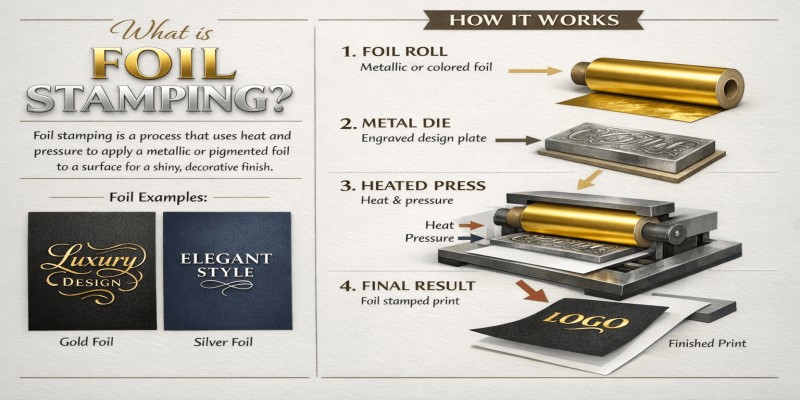
At its essence, foil stamping is a dry heat process that bonds a thin layer of metallic, pigmented, or holographic foil onto a substrate (paper, cardstock, leather, etc.) using a heated die. The result is a metallic or colored impression that is brighter, more reflective, and more luxurious than traditional printing.
Unlike UV or metallic inks, which sit on the surface, foil stamping fuses the foil into the material, giving superior durability and a deeper sensory experience.
How Foil Stamping Works (Step‑By‑Step Process)
1. Artwork Preparation
Your designer creates vector‑based files for areas that will be foiled. These are separated into a distinct spot channel in the design, labeled specifically for foil application.
2. Engraving the Die
A metal die (usually brass or magnesium) is engraved with the design. The quality of engraving directly impacts the foil’s detail and consistency.
- Brass dies: longest life, best detail
- Magnesium dies: economical, fast fabrication
3. Mounting & Setup
The die is mounted onto a foil stamping press. The substrate (paper, board, leather, etc.) is aligned precisely.
4. Heat + Pressure + Foil Application
The press brings together:
- Heat: activates the adhesive layer in the foil
- Pressure: presses foil into the substrate
- Foil roll: transfers the pigmented or metallic layer to the material
The foil permanently bonds only where heat and pressure interact with the die.
5. Inspection & Finishing
Finished pieces are inspected for registration, adhesion, and consistency. Additional processes like embossing, silk screening, or emboss‑deboss may follow.
Types of Foils
Foils are not one‑dimensional. Choosing the right type elevates perception and aligns with your brand message.
1. Metallic Foils
- Gold, silver, copper
- Highest shine
- Ideal for luxury brands
2. Matte Foils
- Subtle shine
- Professional and understated
3. Holographic Foils
- Rainbow effects
- Excellent for creative packaging or limited‑edition products
4. Pigment Foils
- Solid colors without metallic shine
- Great for brand color fidelity
5. Textured Foils
- Cracked, brushed, linen effects
- Adds tactile richness
Foil Stamping vs. Alternatives
To understand foil’s true value, let’s compare it with common alternatives.
| Feature | Foil Stamping | Metallic Ink | UV Coating | Embossing |
|---|---|---|---|---|
| Reflective Shine | Excellent | Limited | None | None |
| Depth | Slightly raised | Flat | Flat | Deep |
| Brand Perception | Premium | Mid | Mid | Premium |
| Durability | High | Mid | Mid | High |
| Cost | Higher | Lower | Mid | Mid–High |
Why Foil Wins for Premium Branding
- Catch‑the‑eye brilliance
- Sense of exclusivity
- Great for luxury, gift, and corporate markets
- Higher perceived value increases conversion
Practical Applications of Foil Stamping
Foil stamping isn’t just ornate it’s strategic.
1. Packaging
Luxury boxes, cosmetics packaging, and premium spirits packaging foil communicate value before the product is opened.
2. Business Cards
Foil accents transform ordinary cards into unforgettable keepsakes.
3. Invitations & Stationery
Weddings, galas, awards foil makes milestones shimmer.
4. Labels & Tags
Wine labels, leather tags, fashion hang tags foil makes products stand out on crowded shelves.
Design Considerations (Before You Print)
To maximize impact and minimize waste:
Vector Paths Only
Foil areas must be defined in vector paths with clear edges.
Simplicity is Strength
Intricate fine lines may not work well; opt for bold areas and readable type.
Contrast Is Key
Foil shines most when paired with darker substrates or matte finishes.
Die Cost & ROI
Dies cost more upfront but pay dividends when used on repeat runs.
Common Mistakes and How to Avoid Them
Even experienced printers can slip.
1. Thin strokes
Risk: foil doesn’t transfer evenly
Solution: keep strokes ≥1pt and avoid hairlines.
2. Poor registration
Risk: misaligned foil
Solution: accurate press setup and test proofs.
3. Incorrect materials
Risk: weak adhesion or tearing
Solution: choose compatible stocks and test.
4. Clashing finishes
Risk: competing effects overwhelm design
Solution: limit embellishments, let foil shine.
Sustainability & Foil
Premium doesn’t have to mean wasteful. Today’s foil products include recyclable and low‑impact options. Choosing eco‑friendly substrates and recyclable foil aligns your brand with greener practices.
Cost Considerations
Foil increases production costs due to:
- Die creation
- Specialty press setup
- Material premium
But the ROI via stronger brand perception, higher sales prices, and memorability often justifies the investment. For premium products, foil is not a cost it’s a strategic brand amplifier.
Future Trends in Foil Stamping
Technology continues to evolve:
- Digital foil printing (no dies)
- Laser‑cut dies for micro‑detail
- Variable data foil for personalization
Brands that adopt these next‑gen options will define the next wave of premium print.
Conclusion
Foil stamping is more than decoration it’s a branding strategy. When executed with precision, it elevates perception, enhances tactile experience, and delivers a luxury impression that resonates.
Whether you’re launching a new product, refreshing packaging, or designing standout collateral, foil stamping is one of the most effective tools in the premium print toolbox.