






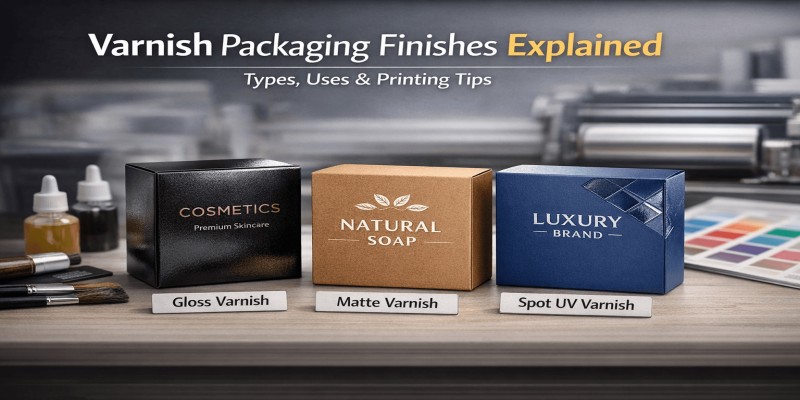
The first point of contact between your brand and a consumer is the box. While structural integrity and high-quality graphics are essential, the packaging finish-specifically varnish-is the secret weapon that elevates a standard container into a premium brand experience.Whether you are shipping high-end electronics from Silicon Valley or artisan cosmetics from New York, choosing the right varnish can dramatically impact your product's perceived value and durability. This guide breaks down everything you need to know about selecting the perfect finish for your custom packaging.
What is Varnish Packaging ?
A varnish is a clear liquid coating applied to printed packaging during or after the printing process. Think of it as a transparent "top coat" for your box. It seals the ink, prevents smudging, and adds a specific texture or sheen that aligns with your brand identity. In the USA, where shipping distances are vast, varnishes are a functional necessity to ensure that Custom Printed Boxes arrive at their destination looking pristine.
4 Main Types of Varnish Finishes
Choosing the right finish depends on your aesthetic goals and the environment your packaging will face on the shelf or in the mail.
1. Gloss Varnish
Gloss is the most popular choice for brands that want to "pop." It reflects light, making colors appear more vibrant and saturated. It also provides a smooth, slightly slippery surface that resists dust and fingerprints.
- Best For: Food packaging, toy boxes, and promotional retail items.
- USA Use Case: Ideal for retail shelves in high-traffic stores like Target or Walmart where visual impact is key to catching a shopper's eye.
2. Matte Varnish
Matte provides a smooth, non-reflective surface. It offers a sophisticated, "soft-touch" feel that communicates luxury and modern elegance. Unlike gloss, matte finishes diffuse light, giving the packaging a flatter, more artistic appearance.
- Best For: Luxury electronics, high-end apparel, and organic skincare.
- Pro Tip: While matte is incredibly elegant, it can sometimes show scuffs more easily than gloss. Pair it with Rigid boxes for a truly high-end feel.
3. Satin (Silk) Varnish
Satin is the "middle ground." It offers a subtle sheen-higher than matte but lower than gloss. It provides excellent scuff resistance while maintaining a professional, understated look that doesn't overwhelm the design with glare.
- Best For: Pharmaceutical packaging and professional hardware.
4. Spot UV Varnish
This is a premium technique where a high-gloss UV coating is applied only to specific areas of the box (like a logo or a brand name). This creates a striking contrast between a matte background and the shiny "spot" area, adding a 3D-like texture.
- Best For: Premium gift boxes and jewelry packaging.
Why Varnish Matters for products
- Durability in Transit: With the rise of e-commerce across the United States, packages often travel thousands of miles through various climates. A quality varnish protects the ink from "rub-off" during the vibrations of truck or air transport.
- Brand Perception: A "Soft Touch" matte finish can justify a higher price point by making the unboxing experience feel like a luxury event. Research shows that tactile packaging increases consumer connection to a product.
- Moisture Resistance: For products stored in humid warehouses or refrigerated sections, a protective coating prevents the Cardboard or Kraft material from becoming soggy or the ink from bleeding.
Technical Comparison: Varnish vs. Laminate vs. Aqueous
While "varnish" is a catch-all term, there are different chemical applications used in the USA printing industry:
| Coating Type | Description | Best Benefit |
| Varnish | Oil-based, applied like ink. | Low cost, easy to apply. |
| Aqueous (AQ) | Water-based, eco-friendly. | Fast drying, non-yellowing. |
| UV Coating | Cured with Ultraviolet light. | Highest gloss and protection. |
| Lamination | A thin plastic film bonded to paper. | Maximum tear resistance. |
Expert Printing Tips for a Professional Finish
Match Finish to Material:
If you are using Eco-friendly Kraft paper, a heavy gloss might look out of place. Stick to matte or aqueous coatings to preserve the "natural" look. For Cardboard boxes, gloss is standard.
The "Rub Test":
If your design uses dark, heavy ink coverage (like solid black or navy), a varnish is mandatory. Without it, the ink can smudge onto the customer’s hands.
No Die-Cut Charges & Free Design:
When working with a professional packaging partner, look for those that offer free design support. This allows you to see a 3D mockup of how the gloss or matte finish will interact with your logo before you go to print.
Sustainability Trends:
More USA brands are shifting toward Aqueous (AQ) coatings because they are water-based and more easily recyclable than traditional oil-based varnishes.
Common Uses in the Industry
Cosmetics:
Usually prefer Matte or Spot UV to emphasize luxury.
Beverage:
Gloss is preferred to handle moisture and potential spills.
Subscription Boxes:
Satin or Aqueous is often used to ensure the box survives the mailing process without scuffs.
Conclusion
The finish you choose is the final "handshake" with your customer. By understanding the technical differences between gloss, matte, and spot finishes, you can ensure your Custom Packaging not only survives the journey across the USA but arrives looking like a work of art. Whether you need a sleek look for a boutique in Florida or a rugged finish for a tech firm in California, the right varnish makes all the difference.