




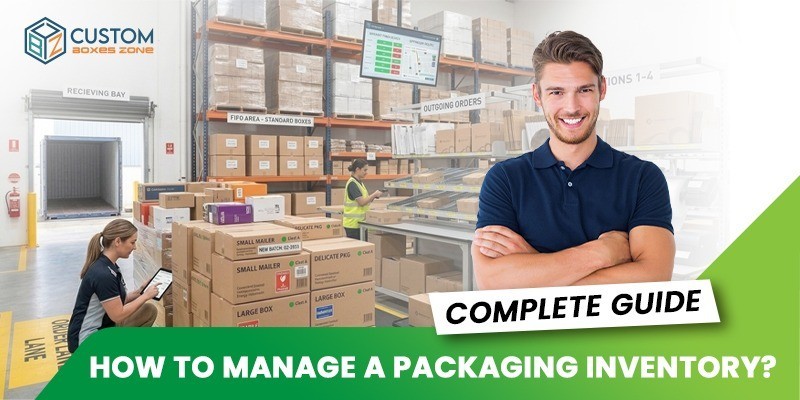
Picture this: your business is booming, orders are flooding in and then suddenly, you're out of shipping boxes. Production halts. Customers wait. Revenue bleeds. If this scenario sounds familiar, you're not alone. Poor packaging inventory management is one of the most overlooked bottlenecks in modern supply chains.
Learning how to manage a packaging inventory isn't just a logistics exercise it's a direct driver of profitability, customer satisfaction, and operational excellence. In this comprehensive guide, you'll discover a step-by-step system to take total control of your packaging materials, eliminate waste, and never face a stockout again.
What Is Packaging Inventory Management?
Packaging inventory management is the systematic process of tracking, storing, replenishing, and optimizing the packaging materials your business uses to store, protect, and ship products to customers. These materials include corrugated boxes, poly bags, bubble wrap, foam inserts, packing tape, labels, lids, jars, cans, and any other protective or presentational materials.
Unlike product inventory, which tracks your sellable goods, packaging inventory focuses on the materials needed to get those goods to customers safely. Without a strong packaging inventory system, businesses risk production delays, damaged goods, overspending, and environmental waste.
Key industry numbers to keep in mind:
- Inventory consumes 20–30% of the total business budget
- Packaging can account for up to 5% of a manufacturer's cost of goods sold (COGS)
- A single corrugated box costs $2–$4 per unit; storing one pallet runs $16–$48 per month
- Proper packaging inventory management can reduce inventory costs by up to 10%
Why It Matters More Than You Think
Many businesses laser-focus on product inventory while treating packaging as an afterthought. This is a costly mistake. Here's why packaging inventory management deserves a dedicated strategy:
Prevents stockouts: Running out of boxes or tape mid-shift can halt your entire fulfillment operation instantly.
- Reduces overstocking: Excess packaging ties up capital and eats expensive warehouse space that could be used productively.
- Cuts carrying costs: Inventory holding costs can reach 45–55% of total inventory value proper management slashes this significantly over time.
- Supports sustainability: Efficient tracking reduces waste and helps you meet growing eco-conscious consumer and regulatory expectations.
- Protects brand reputation: Inconsistent or damaged packaging directly erodes customer trust and increases returns.
- Improves supply chain agility: A well-managed system helps you adapt quickly to demand spikes, seasonal fluctuations, and supplier disruptions.
Audit & Understand Your Current Packaging Needs
Before you can optimize anything, you need a clear picture of what you're working with. Start by conducting a complete packaging audit.
What to include in your packaging audit:
List every type of packaging material currently in use boxes, mailers, tape, filler, labels, and dividers. Record current stock quantities, dimensions, weight, and unit cost for each item. Identify which materials are used for which product SKUs, assess current storage conditions, including temperature and humidity, and flag any slow-moving or expired materials that are quietly wasting space and money.
Pro Tip: Segment your packaging by product type from the start. Delicate items need shock-absorbing protection like foam inserts; lightweight goods benefit from compact poly mailers that reduce shipping costs. Matching packaging to product characteristics eliminates over-packaging waste.
Set Up a Centralized Inventory Tracking System
The foundation of effective packaging inventory management is a centralized system that gives you real-time visibility into stock levels across all locations, suppliers, and warehouses.
A centralized system eliminates the chaos of siloed spreadsheets, verbal updates, and manual counts. Whether you're operating one warehouse or ten distribution centers, this system should serve as your single source of truth for all packaging materials.
Key features to look for in a tracking system:
Real-time stock level monitoring with automatic low-stock alerts, barcode scanning or RFID integration for accurate check-in and check-out, multi-location inventory visibility, supplier management and purchase order tracking, integration with your ERP or e-commerce platforms, and reporting dashboards for usage trends and cost analysis.
On the technology side, barcode systems are cost-effective and suitable for most small-to mid-sized businesses. RFID technology offers hands-free bulk scanning and is ideal for high-volume warehouses where speed and accuracy are critical. Both significantly reduce human error compared to manual tracking methods.
Organize Your Warehouse Storage Efficiently
Even the best inventory software is useless if your physical warehouse is disorganized. Efficient storage organization reduces picking time, prevents material damage, and maximizes your available space.
Best practices for packaging storage organization:
Zone by usage frequency to place high-turnover materials like your most-used box sizes and tape near packing stations, and store slow-movers in deeper aisles. Use vertical space by investing in heavy-duty shelving, racking systems, and pallets to maximize cubic footage. Label every shelf, bin, and storage area clearly with the material name, SKU, and bin location code.
Group materials by category: cushioning, outer boxes, labels, and tape to streamline packing workflows. And always maintain a dedicated quarantine zone for defective or damaged packaging to prevent accidental use.
Layout tip: Design your warehouse flow in a U-shape, receiving, then storage, then packing, then dispatch. This layout is proven to reduce handling time significantly compared to linear setups.
Set Reorder Points and Safety Stock Levels
One of the most critical elements of packaging inventory management is knowing exactly when to reorder, not too early, which causes overstocking, and not too late, which causes stockouts.
How to calculate your Reorder Point (ROP):
Reorder Point = (Average Daily Usage × Lead Time in Days) + Safety Stock
Example: You use 200 boxes per day. Your supplier takes 5 days to deliver. Your safety stock is 500 boxes.
ROP = (200 × 5) + 500 = 1,500 boxes
When your stock hits 1,500 boxes, it's time to reorder immediately.
What is safety stock?
Safety stock is your buffer inventory, extra materials held to protect against unexpected demand spikes or supplier delays. The right safety stock level depends on demand variability, supplier reliability, and your risk tolerance. For most businesses, one to two weeks of average usage is a solid and practical starting point.
Once your reorder points are defined, configure your inventory management system to trigger automatic purchase orders or alerts when stock dips to the ROP threshold. This removes human error from the replenishment process entirely.
Use the FIFO Method to Prevent Waste
FIFO First In, First Out is an inventory rotation method that ensures you always use older packaging materials before newer stock. This is particularly critical for materials that have a limited shelf life, such as adhesive tapes, biodegradable packaging, or moisture-sensitive materials.
Implementing FIFO in your warehouse:
Store new stock behind existing stock on shelves. Date-stamp all incoming deliveries clearly and visibly. Train staff to always pick from the front of shelves or bins. And set expiry alerts in your inventory software for any time-sensitive materials.
Common mistakes to avoid
Many businesses stack new deliveries in front of existing stock for convenience. This creates dead stock that eventually expires or degrades, leading to direct financial loss. FIFO discipline, practiced consistently, can save thousands of dollars annually.
Leverage Demand Forecasting
Reactive inventory management always keeps you one step behind. The businesses that truly master packaging inventory management are those that forecast demand proactively using historical data and market intelligence.
Key inputs for accurate demand forecasting:
Historical usage data from your tracking system reveals weekly and monthly consumption patterns. Seasonal trends help you prepare for holiday surges, peak sales periods, and promotional campaigns. Sales pipeline data, gathered directly from your sales team, helps anticipate large orders or new product launches.
Supplier lead time data allows you to build delivery variability into your buffer planning. And monitoring supply chain disruptions and material price fluctuations gives you an early warning system for adjusting your strategy.
Modern inventory management software can analyze your historical data automatically and generate demand forecasts with strong accuracy, turning guesswork into data-driven precision that improves continuously over time.
Automate With Inventory Management Software
Manual spreadsheets work fine when you're shipping 50 orders a week. At 500 or 5,000 orders, they become a serious liability. Dedicated inventory management software transforms packaging management from a stressful firefight into a smooth, automated operation.
What good software does for you:
It automatically triggers reorder alerts when stock hits your defined threshold. It integrates with your e-commerce platform for real-time inventory syncing. It connects with accounting software for a full 360-degree financial view of your packaging costs. It generates detailed usage reports, cost analysis, and supplier performance data. And it supports barcode and RFID scanning for fast, accurate receiving and picking workflows.
Conduct Regular Inventory Audits
Even the most sophisticated software can drift from physical reality without periodic verification. Regular inventory audits keep your system accurate and surface hidden problems before they escalate into expensive issues.
Three auditing methods to know:
A full physical count is a complete count of all packaging materials. It is time-consuming but comprehensive, and best done quarterly or annually to reset your baseline.
Cycle counting involves counting a small, rotating subset of materials daily or weekly so that every item is verified regularly without disrupting ongoing operations. This is the gold standard for maintaining ongoing accuracy.
Spot auditing means random checks on high-value or high-turnover items. It is excellent for quickly catching discrepancies between your system and physical reality.
During every audit, look for discrepancies between system records and physical counts, slow-moving or obsolete stock occupying valuable space, damaged materials that need to be written off, materials approaching expiry that need prioritized use, and any signs of theft, misplacement, or process breakdowns.
Train Your Team & Build Clear Communication Channels
Technology and processes only work when your people use them correctly. Staff training and open communication are consistently the most underestimated pillars of packaging inventory success.
Training essentials to cover with your team:
System training should cover how to log incoming stock, scan materials, and navigate the inventory dashboard. FIFO protocols must be taught to every person who touches packaging materials, not just supervisors. Reorder procedures should clearly define who is responsible for approving and placing purchase orders. Damage reporting needs a clear, simple process for flagging and quarantining defective materials. And proper storage conditions for different packaging types should be part of every new hire's onboarding.
Culture tip: Create an environment where warehouse staff can freely report inventory issues, suggest process improvements, and flag supplier quality problems. Frontline teams often notice problems months before management does. Their insight is one of your most valuable and underutilized assets.
Track KPIs & Continuously Optimize
What gets measured gets managed. Tracking the right Key Performance Indicators gives you objective data to continuously improve your packaging inventory system over time.
Essential packaging inventory KPIs:
Inventory turnover rate shows how often you cycle through your packaging stock higher is generally better and indicates efficient management.
Stockout frequency tracks how many times you ran out of a material. The target is always zero.
Carrying cost percentage measures holding costs as a share of total inventory value. The industry average sits between 20–30%.
Order accuracy rate measures the percentage of orders shipped with correct packaging. Target 99% or higher.
Supplier lead time variance tracks deviation from expected delivery windows and helps you adjust your safety stock levels intelligently.
Packaging cost per unit divides total packaging spend by units shipped, revealing your cost efficiency trend over time.
Waste rate measures the percentage of packaging materials discarded unused, your primary sustainability benchmark.
Review these KPIs monthly. Identify your weakest metrics. Build targeted improvement initiatives around them. This creates a continuous improvement loop that compounds over time into significant operational savings and a competitive advantage.
Common Packaging Inventory Mistakes to Avoid
Treating packaging as an afterthought is the biggest mistake of all. Packaging inventory deserves the same strategic attention as your product inventory.
Using spreadsheets at scale is a recipe for inaccuracy and stress. Invest in proper software before volume overwhelms your manual processes.
Single-supplier dependency creates fragile supply chains. Always develop relationships with at least two or three backup suppliers for your critical materials.
Overordering to "be safe" ties up capital and warehouse space unnecessarily. Use data and forecasting, not gut instinct, to set your stock levels.
Skipping audits allows errors to compound silently. Even the best systems need periodic physical verification to stay accurate.
Neglecting sustainability is increasingly costly. Consumers and regulators are raising the bar on eco-friendly packaging practices, and falling behind can hurt your brand.
Failing to train staff properly means great systems will be used incorrectly. People are the most important variable in any inventory process.
Final Word
Managing packaging inventory effectively is not a luxury; it's a competitive necessity. By combining a centralized tracking system, smart reorder strategies, organized warehouse practices, demand forecasting, and a culture of continuous improvement, your business can eliminate costly disruptions and unlock significant operational savings.
Start with the audit. Build your system step by step. Measure your KPIs consistently. The businesses that master packaging inventory management don't just run smoother, they grow faster, waste less, and serve their customers better than the competition.