




If you run a business in the USA and sell physical products, your packaging is the first thing your customer sees. Before they open the box, before they touch the product, they judge your brand by the box. That is why the printing method you choose for your custom packaging boxes matters more than most business owners realize.
Flexographic printing, also called flexo printing, has become the most widely used printing method for custom packaging boxes across the United States. From food brands in Texas to e-commerce sellers in California, businesses are choosing flexo printing because it delivers high quality, fast turnaround, and low cost per unit, especially at scale.
In this complete guide, we will explain everything you need to know about flexographic printing for custom packaging boxes, how it works, what types of boxes it works best for, how it compares to other printing methods, what it costs, and how to decide if it is right for your brand.
What Is Flexographic Printing?
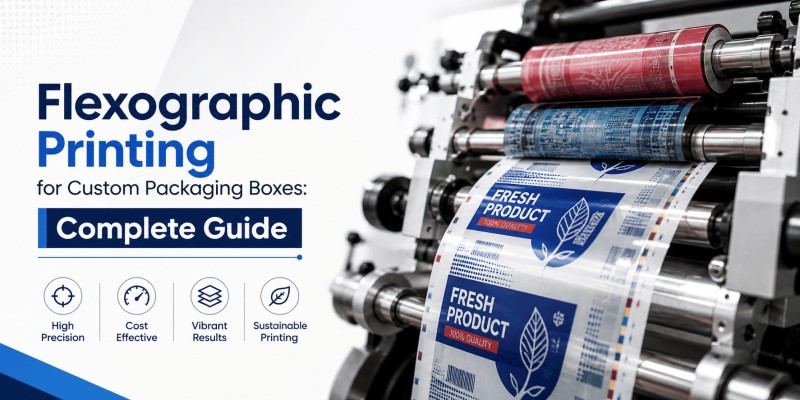
Flexographic printing is a high-speed, high-volume printing process that uses flexible rubber or photopolymer relief plates to transfer ink directly onto packaging material. The plates wrap around rotating cylinders and press against the substrate, which could be corrugated cardboard, kraft paper, plastic film, or foil as it moves through the press at very high speed.
The name "flexographic" comes from the flexible nature of the printing plates. Unlike rigid plates used in offset printing, flexo plates can bend and conform to a variety of surfaces, which makes them ideal for printing on boxes, bags, labels, and wrappers of all shapes and sizes.
In the USA, flexographic printing is used to produce the vast majority of corrugated shipping boxes, folding cartons, retail packaging, food boxes, and e-commerce mailer boxes you see every single day. Industry experts estimate that around 60 percent of the world's packaging is produced using flexographic printing, and that number continues to grow.
How Does the Flexographic Printing Process Work?
Understanding the flexo printing process helps you make smarter packaging decisions for your brand. Here is how it works, step by step.
Pre-Press and Plate Making
Your artwork is converted into a printing plate, usually made of photopolymer. Each color in your design requires its own separate plate. This is why flexo printing has upfront plate costs, but those plate costs are spread across large print runs, bringing the per-unit cost down significantly.
Ink Transfer via the Anilox Roller
The anilox roller is the heart of a flexo press. It is a precision-engraved cylinder that picks up ink from the ink tray and deposits an exact, controlled amount of ink onto the printing plate. A doctor blade scrapes off any excess ink from the anilox roller, ensuring a perfectly consistent ink laydown on every single impression.
Printing onto the Substrate
The inked plate then presses against the packaging material of your corrugated box, kraft mailer, or retail carton and transfers the image cleanly and quickly. The substrate moves through the press continuously, which is what allows flexo presses to produce tens of thousands of boxes per hour without slowing down.
Drying and Finishing
After printing, the ink dries quickly, especially with UV-cured or water-based inks. Finishing options like lamination, varnish coating, die-cutting, and scoring can often be done in-line on the same press run, saving significant time and reducing overall production costs.
Types of Inks Used in Flexographic Printing
The ink you choose affects the final look, durability, and environmental impact of your custom packaging boxes. There are three main types of flexo inks used across the USA.
- Water-Based Inks are the most popular choice for corrugated boxes, kraft packaging, and food-safe applications. They are low in volatile organic compounds (VOCs), environmentally friendly, and safe for food contact packaging. Water-based inks are the preferred choice for brands that want sustainable, eco-conscious packaging without sacrificing print quality.
- Solvent-Based Inks bond aggressively to plastic films, foils, and non-porous substrates. They are extremely durable and resist scratching, moisture, and chemicals, making them ideal for outdoor packaging, industrial products, or items exposed to harsh conditions during shipping.
- UV-Curable Inks are instantly cured under ultraviolet light, which means zero drying time and maximum production speed. UV inks produce the sharpest colors, highest gloss levels, and best scratch resistance of all three ink types. They are the top choice for premium retail packaging, cosmetic boxes, and pharmaceutical packaging where shelf presence and visual impact are critical.
What Custom Packaging Boxes Work Best with Flexo Printing?
Flexographic printing works across a wide range of packaging types. Here are the most common custom boxes that US businesses produce using flexo printing.
Corrugated Shipping Boxes are the most common application for flexo printing in the USA. Whether you are shipping electronics, apparel, or food products, flexo delivers clean logos and branding on corrugated board at a very low cost per unit.
Kraft Mailer Boxes are a favorite for e-commerce brands. The natural look of kraft paper combined with clean one or two-color flexo printing creates a premium unboxing experience without a premium price tag, ideal for DTC brands and subscription boxes.
Retail Product Boxes Folding cartons for cosmetics, supplements, candles, and food products are frequently flexo printed, especially for high-volume SKUs where cost efficiency is just as important as aesthetics.
Food Packaging Boxes Bakery boxes, pizza boxes, cereal boxes, and snack packaging are almost universally flexo printed in the USA because of food-safe water-based inks and the ability to produce millions of units quickly.
Custom Mailer Boxes: Subscription box brands and direct-to-consumer companies use flexo printing to create branded mailer boxes that make a strong impression the moment they land on a customer's doorstep.
Flexographic Printing vs Offset Printing vs Digital Printing
Choosing the right printing method depends on your order volume, design complexity, and budget. Here is how flexo printing compares to the two main alternatives.
Flexo vs Offset Printing
Offset printing transfers ink through a rubber blanket and is known for fine detail and precise color matching on flat paper materials like brochures and high-end folding cartons. However, offset cannot print directly onto corrugated board and is significantly slower at high volumes. For custom packaging boxes ordered in the thousands, flexo wins on both production speed and overall cost.
Flexo vs Digital Printing
Digital printing has no plate costs, making it excellent for very short runs of 50 to 500 boxes. It also handles variable data like unique QR codes or personalized names on each box. However, digital printing is much more expensive per unit at higher volumes. Once your order exceeds 1,000 to 2,000 boxes, flexo almost always delivers a lower cost per unit than digital, and the gap widens the more you order.
A simple rule to remember: if you need fewer than 500 boxes, digital printing makes sense. If you need 1,000 or more, flexo printing is the smarter investment for your business.
Flexographic Printing Cost: What US Brands Need to Know
One of the most common questions from packaging buyers in the USA is: " How much does flexo printing actually cost? The total cost of a flexo print job includes plate setup fees, ink costs, substrate costs, labor, and any finishing steps. The highest upfront cost is plate making. Each color in your design requires its own plate, and plates typically cost between $150 and $400 each, depending on size and complexity.
However, once plates are made, the cost per unit drops dramatically as your order volume increases. A run of 1,000 boxes carries a higher per-box cost because the plate setup fee is spread across fewer units. A run of 50,000 boxes spreads those same plate costs across far more units, bringing the per-box price down to a very small fraction of the original setup investment.
This is exactly why flexographic printing delivers the best return on investment for brands that order packaging in bulk. Plates can also be stored and reused for future print runs, meaning your second and third orders cost even less than your first.
Why US Brands Choose Flexographic Printing for Custom Boxes
There are several clear reasons why flexographic printing dominates the US packaging industry and continues to grow in popularity.
- Speed at Scale: A modern flexo press can produce upwards of 10,000 to 12,000 impressions per hour. For high-volume brands, this means faster turnaround times and the ability to fulfill large packaging orders without delays that hurt your supply chain.
- Works on Multiple Substrates: Flexo prints on corrugated cardboard, kraft paper, plastic films, metallic foils, and more. This versatility makes it the go-to method for packaging companies that serve food, retail, cosmetics, electronics, and e-commerce industries simultaneously.
- Consistent Brand Colors Across Every Run: Flexo presses use controlled ink delivery through the anilox roller, which ensures your brand colors stay identical whether you are printing 5,000 boxes or 500,000 boxes. Consistent packaging color builds brand recognition and consumer trust on retail shelves.
- Eco-Friendly and Sustainable Options: Water-based flexo inks are low-VOC and widely approved for food-safe and sustainable packaging. Many US brands are making the switch to flexo printing on recycled substrates to meet their corporate sustainability goals and appeal to environmentally conscious consumers.
- Inline Finishing Saves Time and Money: Varnishing, laminating, die-cutting, and scoring can all be completed in a single press pass, dramatically reducing production time, handling costs, and the risk of quality issues between separate production stages.
Common Mistakes to Avoid When Ordering Flexo-Printed Custom Boxes
Even experienced buyers sometimes make avoidable mistakes when ordering flexo-printed packaging. Here are the most important ones to watch out for. Using too many colors in your design increases plate costs significantly. For brands on a tight budget, limiting your design to one, two, or three colors keeps costs low without sacrificing brand impact, especially on kraft or corrugated board.
Not requesting a digital proof before production can lead to expensive reprints. Always review and approve a proof before your full order goes to press. A good packaging supplier will always send you a proof automatically.
Ordering too small a quantity on your first run means higher per-unit costs. If you are confident in your design and have consistent product demand, committing to a larger run from the start will save you a significant amount per box.
Conclusion
After reviewing every aspect of flexographic printing from the process and inks to the press types and cost structure, one thing is clear: flexo printing is not just a technical choice; it is a strategic business decision.For US brands ordering custom packaging boxes in volumes of 1,000 units or more, flexographic printing consistently offers the best combination of print quality, production speed, cost efficiency, and sustainability. It is the reason why the packaging on grocery store shelves, e-commerce mailer boxes, and retail product boxes across America looks sharp, consistent, and professional run after run.
Whether you are a small business placing your first packaging order or an established brand scaling up for peak season, flexo printing gives you the power to deliver packaging that protects your product, strengthens your brand identity, and impresses your customers from the moment they see the box. The best packaging does not just hold a product; it tells your brand story. And flexographic printing is one of the most powerful, proven, and cost-effective tools available to tell that story at scale.
At Custom Boxes Zone, we help US businesses of every size get custom packaging boxes printed with precision, speed, and care. From design support to fast nationwide delivery, we make the entire process simple. Request your free quote today and take the first step toward packaging that works as hard as your brand does.